> ## Documentation Index
> Fetch the complete documentation index at: https://docs.digifist.com/llms.txt
> Use this file to discover all available pages before exploring further.
# Collection List Page
> Configure Everest's collection list template and its collection card layout options.
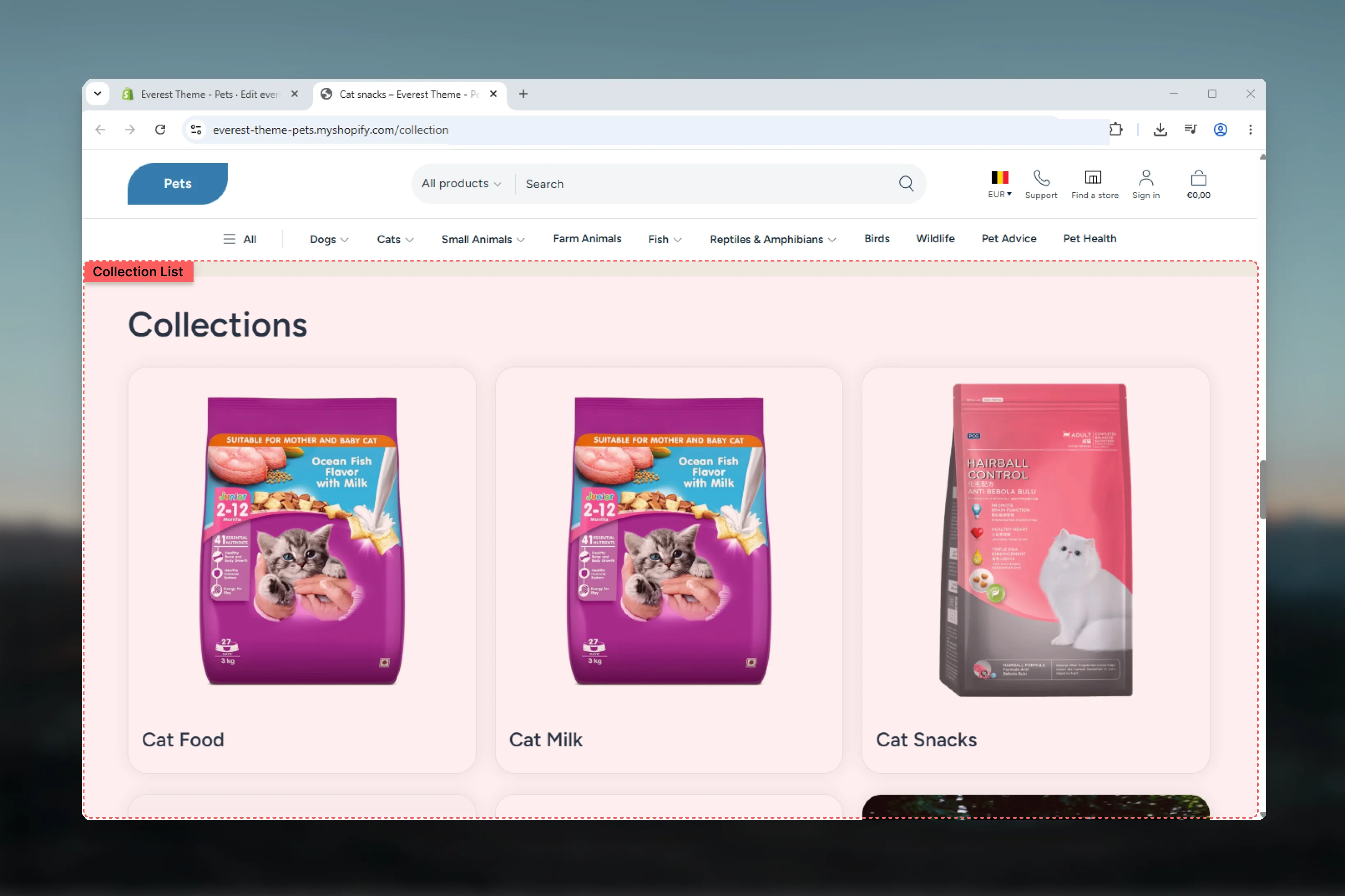
The Collection List Page template controls the main structure used for this page type in Everest. It combines template-specific sections with reusable content blocks, which means most storefront behavior can be adjusted in the Theme Customizer without editing theme code.
 ## What this template controls
* Layout structure, width, alignment, and spacing
* Product, collection, or cart-related storefront behavior
* Search, filter, and sorting behavior for product discovery
* Color schemes, contrast, and shared visual styling
* The template section order and the supporting sections included by default
## Template structure
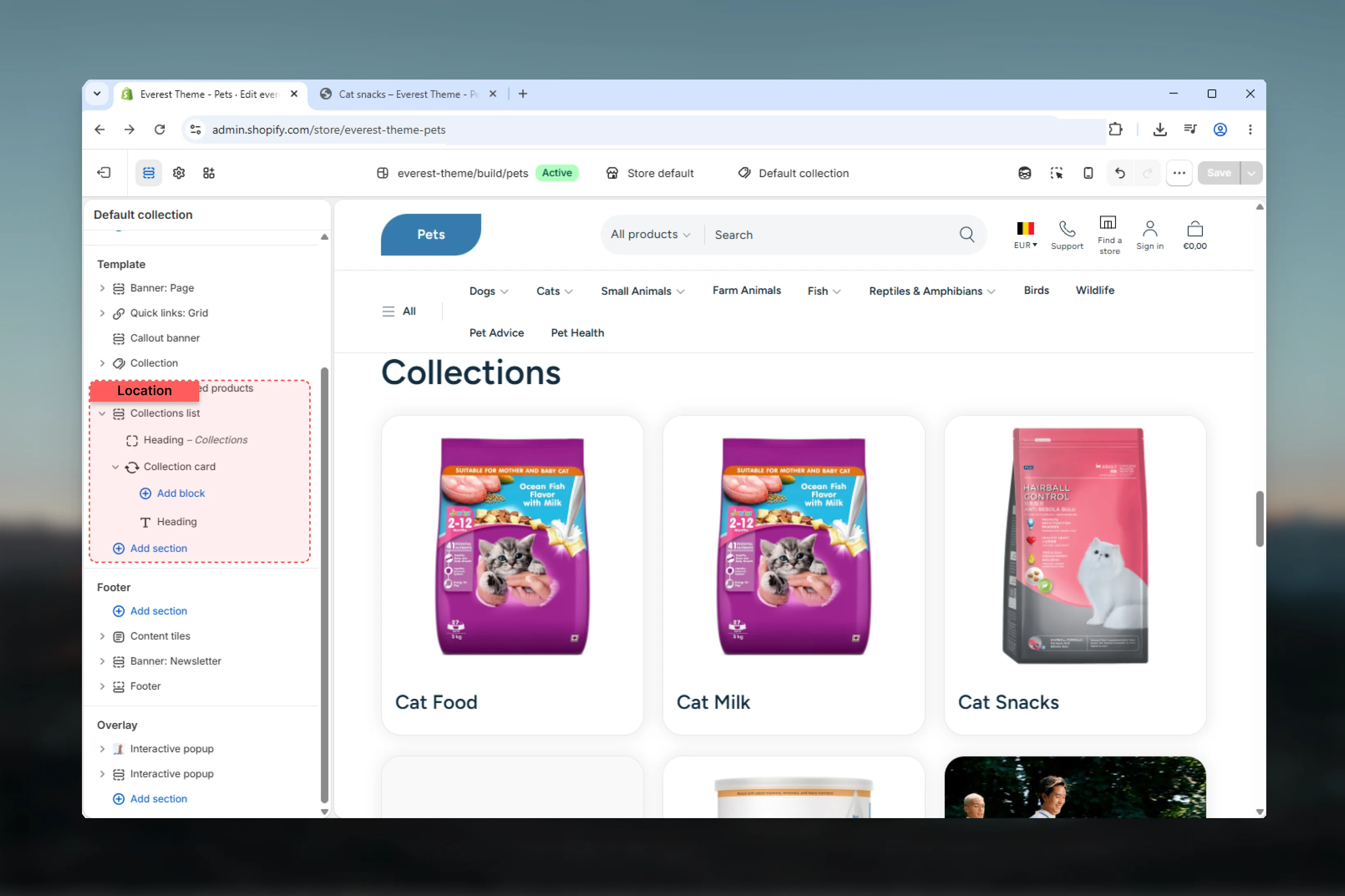
This template uses the following main sections or related theme building blocks by default:
* **List Collections**
## Getting started
Open the relevant page type or assign the template to a resource before customizing it.
Start with the primary content section so layout, filtering, gallery, or page-level behavior is defined before refining supporting content.
Review any banners, content sections, or utility sections included in the template so the full page works together as a set.
## What this template controls
* Layout structure, width, alignment, and spacing
* Product, collection, or cart-related storefront behavior
* Search, filter, and sorting behavior for product discovery
* Color schemes, contrast, and shared visual styling
* The template section order and the supporting sections included by default
## Template structure
This template uses the following main sections or related theme building blocks by default:
* **List Collections**
## Getting started
Open the relevant page type or assign the template to a resource before customizing it.
Start with the primary content section so layout, filtering, gallery, or page-level behavior is defined before refining supporting content.
Review any banners, content sections, or utility sections included in the template so the full page works together as a set.
 ## Main settings
### Settings
## Main settings
### Settings
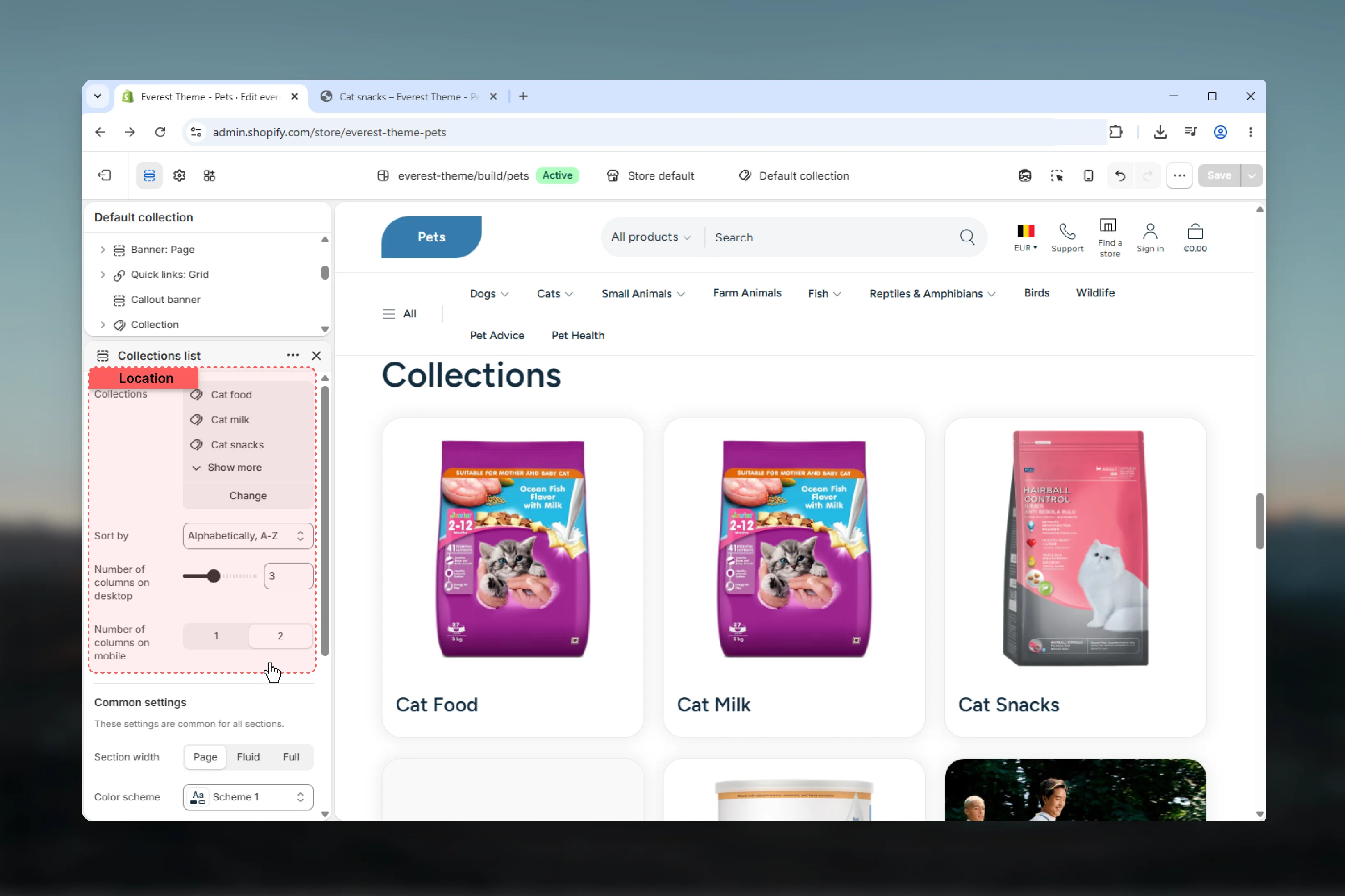 Select the collection source used by **collections**.
Choose how **Sort by** behaves in the section.
Make sure the chosen option still feels easy to scan and use on smaller screens.
**Available options:** Alphabetically, A-Z, Alphabetically, Z-A, Date, new to old, Date, old to new, Product count, high to low, Product count, low to high.
**Default:** `title-ascending`
Adjust **Number of columns on desktop** with a slider-based control.
It has the strongest effect on layout balance and visual hierarchy.
**Range:** `1` to `6` **Default:** `3`
Choose how **Number of columns on mobile** behaves in the section.
It has the strongest effect on layout balance and visual hierarchy.
**Available options:** 1, 2.
**Default:** `2`
### Common settings
Select the collection source used by **collections**.
Choose how **Sort by** behaves in the section.
Make sure the chosen option still feels easy to scan and use on smaller screens.
**Available options:** Alphabetically, A-Z, Alphabetically, Z-A, Date, new to old, Date, old to new, Product count, high to low, Product count, low to high.
**Default:** `title-ascending`
Adjust **Number of columns on desktop** with a slider-based control.
It has the strongest effect on layout balance and visual hierarchy.
**Range:** `1` to `6` **Default:** `3`
Choose how **Number of columns on mobile** behaves in the section.
It has the strongest effect on layout balance and visual hierarchy.
**Available options:** 1, 2.
**Default:** `2`
### Common settings
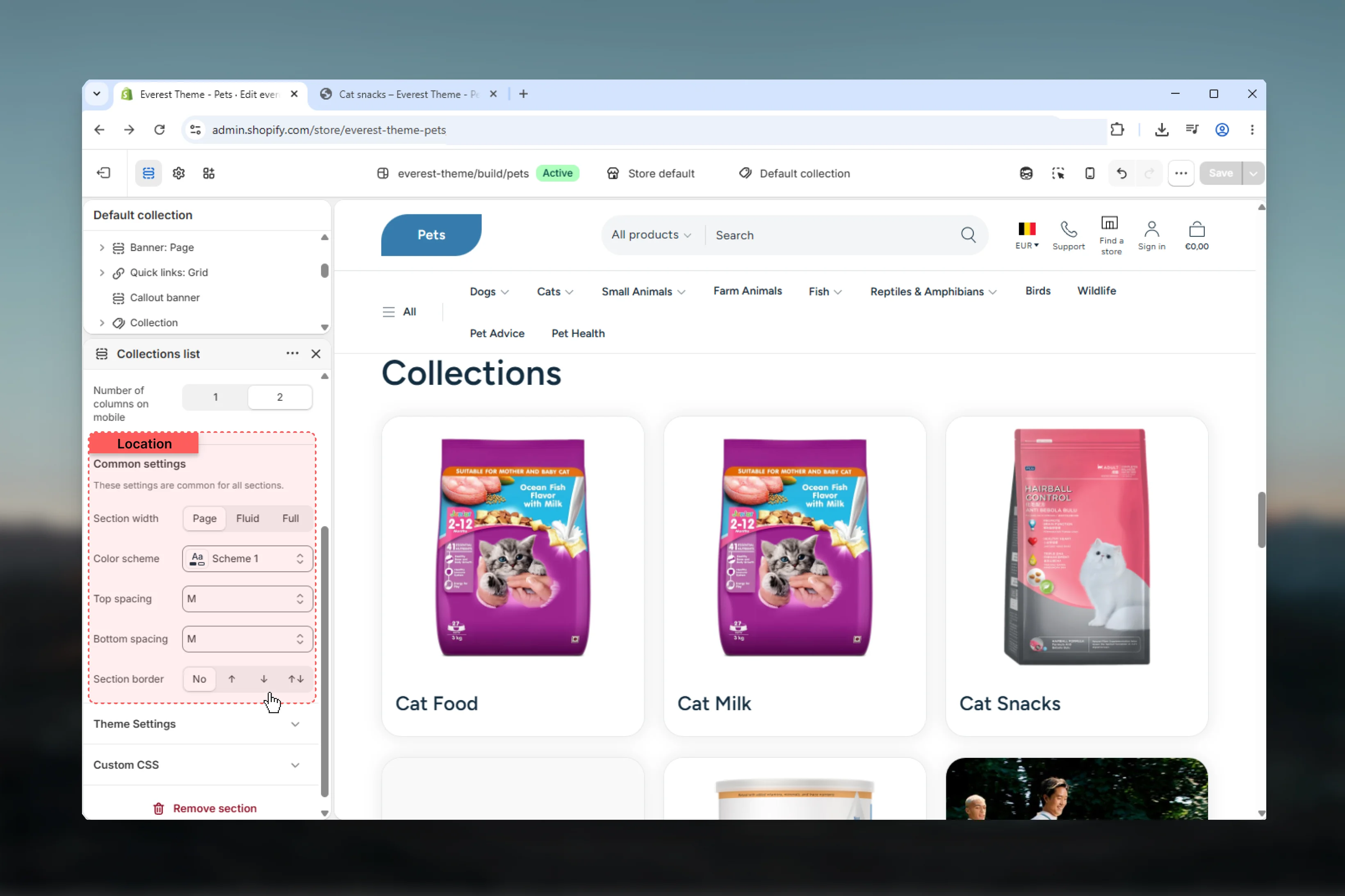 Choose how **Section width** behaves in the section.
This setting shapes the section container and how it sits against surrounding content.
**Available options:** Page, Fluid, Full.
**Default:** `page`
Select the color scheme used for **color scheme**.
Use this to keep contrast and branding consistent with the rest of the store.
**Default:** `scheme-1`
Choose how **Top spacing** behaves in the section.
This setting shapes the section container and how it sits against surrounding content.
**Available options:** No, S, M, L, XL.
**Default:** `2`
Choose how **Bottom spacing** behaves in the section.
This setting shapes the section container and how it sits against surrounding content.
**Available options:** No, S, M, L, XL.
**Default:** `2`
Choose how **Section border** behaves in the section.
This setting shapes the section container and how it sits against surrounding content.
**Available options:** None, Top, Bottom, Both.
**Default:** `none`
## Best practices
* Check contrast after changing color schemes so text and controls remain easy to read.
* Adjust layout changes alongside neighboring sections so page rhythm stays consistent.
* Test this template with real content volume so headings, cards, and filters behave as expected.
* Review supporting sections together because template defaults often work as a coordinated set.
## Related guides
* [Everest Theme Overview](/themes/everest/index)
Choose how **Section width** behaves in the section.
This setting shapes the section container and how it sits against surrounding content.
**Available options:** Page, Fluid, Full.
**Default:** `page`
Select the color scheme used for **color scheme**.
Use this to keep contrast and branding consistent with the rest of the store.
**Default:** `scheme-1`
Choose how **Top spacing** behaves in the section.
This setting shapes the section container and how it sits against surrounding content.
**Available options:** No, S, M, L, XL.
**Default:** `2`
Choose how **Bottom spacing** behaves in the section.
This setting shapes the section container and how it sits against surrounding content.
**Available options:** No, S, M, L, XL.
**Default:** `2`
Choose how **Section border** behaves in the section.
This setting shapes the section container and how it sits against surrounding content.
**Available options:** None, Top, Bottom, Both.
**Default:** `none`
## Best practices
* Check contrast after changing color schemes so text and controls remain easy to read.
* Adjust layout changes alongside neighboring sections so page rhythm stays consistent.
* Test this template with real content volume so headings, cards, and filters behave as expected.
* Review supporting sections together because template defaults often work as a coordinated set.
## Related guides
* [Everest Theme Overview](/themes/everest/index)